Series 04 · Gear and the Weekend
Gear, safety and the race weekend at a private track
What the rulebook actually requires, what a helmet label means, the stand and the between-motos routine, camping at a track and a first practice day.
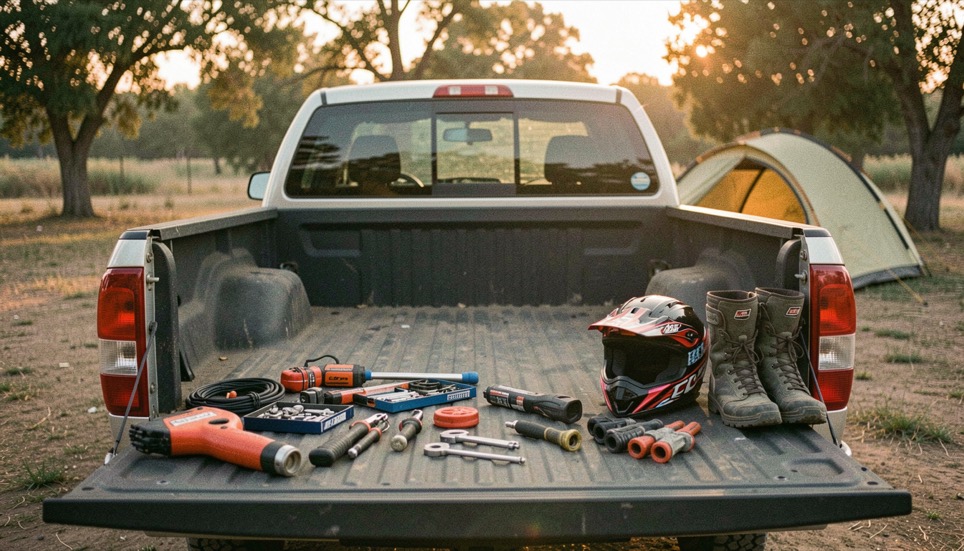
The weekend is the part of motocross that people describe the least and get wrong the most. What is actually required, as opposed to what everybody assumes is required. What a certification label on a helmet does and does not promise. What to do with the twenty minutes between two motos. Where to put a tent so that you sleep. This series answers those.
What this series covers
Four notes. A gear checklist built from the current sanctioning rulebook rather than from habit, separating what is mandatory from what is recommended, with the helmet standards listed by name. A note on the maintenance stand and a between-motos routine that fits in the time available. A note on camping at a track, which is mostly a question of ground, water and where the wind carries dust at six in the morning. And a note on a first practice day, from sign-in to the sound test.
Rules, and whose rules
The rules quoted in this series are those of the American Motorcyclist Association racing rulebook, because it is public, dated and the one most amateur events in the United States follow. A private track is not obliged to follow any of it. Many owners follow the equipment part anyway, because it is the cheapest available answer to a question nobody wants to answer badly.
One warning
Nothing on this site is medical or legal advice, and a certification label is a test result, not a promise. The gear note explains what the DOT label on a helmet actually certifies, which test numbers sit behind it, and why a label that passed a bench test says nothing about any particular fall.
Stories in this series
-
· Gear and the Weekend
Age groups and classes at a club event
Age groups and classes are two separate filters applied to the same programme. The age group is set by calendar year of birth, so everyone in it turns the same age in the same year. The class is set by skill and results, from the entry levels up to the top letters, and it decides which dances and figures you are allowed to use. A first competition day then runs as preliminary rounds that cut the field, followed by a final that produces the ranking.
-
· Gear and the Weekend
Used Dirt Bike on a Budget: Frame and Safety Checks
A used dirt bike is worth buying only when the frame is straight, the safety parts are serviceable, and the price sits at or below what similar machines actually sold for. Check those three things before you talk money. If any one of them fails, walk away, because a bent frame or a dead brake system costs more to fix than most budget buyers expect.
-
· Gear and the Weekend
Rebuild or replace a tired track engine
A tired track engine gets rebuilt when the cases, crank and head are still sound and the wear sits in the top end, the bearings and the seals. It gets replaced when the cases are cracked, the cylinder is beyond its last oversize, or the cost of machining passes the cost of a known good unit. The decision comes down to three numbers: compression, oil consumption and metal in the filter.
-
· Gear and the Weekend
Heat, Hydration and Sleep at a Summer Track Weekend
Water, salt and sleep, in that order. A rider who starts Saturday already behind on fluids and short on sleep will fade in the second moto no matter how good the bike is. Fix those three things before you touch jetting or gearing.
-
· Gear and the Weekend
Truck and trailer service for a dirt bike season
A truck and trailer that haul a bike need one service a year each, plus a brake and tyre check before every season. Put the truck service in late winter, the trailer bearing and brake check in early spring, and a light and coupling inspection the week before your first race weekend. Everything below is the calendar I run on my own rig, with the numbers I actually write on the shop wall.
-
· Gear and the Weekend
A dog at the track: noise, machines, first visit
A dog at a motocross track is dealing with three things at once: engines at close range, ground that moves underfoot, and people moving fast in gear it cannot read. Most dogs can handle a track weekend if you keep the first visit short, keep the dog behind a barrier, and watch the body language instead of the stopwatch. If your dog also works livestock at home, the same skill of reading pressure and flight zones is what you are using here, just pointed at machines instead of sheep.
-
· Gear and the Weekend
Aerobic Base Off the Bike for Moto
You build your aerobic base off the bike, not on it. Walking, easy running and two or three short sessions a week raise the engine that a moto cannot train on its own, because a dirt bike rewards bursts and never asks for a steady thirty minutes of work. Riders over fifty keep the same plan, only the volume drops and the recovery days get longer.
-
· Gear and the Weekend
Why One Move Is Legal Here and Banned There
A move is legal in one discipline and banned in the next because the rulebook is not a list of moves, it is a list of consequences. The same elbow that scores in muaythai is a foul in kickboxing and K-1, and the same body lock that wins a fight in Bangkok is broken after five seconds. Read the rulebook the way you read a track: find the limits first, then ride inside them.
-
· Gear and the Weekend
Boots, Paddock Shoes and Wet Ground
A track weekend asks your feet to do two different jobs, and one pair of shoes cannot do both. Riding boots are stiff, heavy and built to protect a foot that is braced against a peg at speed. Paddock shoes are soft, light and built for walking, driving and standing around. If you wear boots all weekend your feet swell and your ankles get lazy. If you wear paddock shoes on the bike you lose protection and feel. Bring both, and treat them as separate pieces of gear with separate fit rules.
-
· Gear and the Weekend
Choosing a Tow Vehicle: Payload, Fuel, and Used Checks
You need a vehicle with a payload and towing capacity that exceed the weight of your trailer and its contents, and you should verify those limits on the door jamb sticker, not in a brochure. Petrol engines cost less to buy and maintain but burn more fuel under load, while diesel engines deliver better torque and fuel economy when towing. Before you hand over money for a used tow vehicle, inspect the hitch, suspension, brakes, and transmission cooler, and check for rust or abuse.
-
· Gear and the Weekend
Fuel, load and the real cost of a track trip
A loaded trailer adds 20 to 40 percent to your fuel burn, and the exact number depends on frontal area more than weight. E85 cuts your cost per mile only if the price gap at the pump stays wide and your engine is actually calibrated for it. A modified tow vehicle needs a current inspection, a matching registration entry and a tuner who will hand you the calibration file.
-
· Gear and the Weekend
Dirt bike fuel mapping: what an ECU change does
An ECU change on a dirt bike alters when and how much fuel the injector delivers and when the spark fires, nothing more. It does not add displacement, compression or airflow.
-
· Gear and the Weekend
Diagnosis before the dyno: fault codes first
A tuner refuses a machine with an active fault because the dyno cannot separate a mechanical problem from a calibration problem. If the ECU is already correcting for a misfire, a lean bank, or a boost leak, any power number you pull is a measurement of the fault, not of the tune. Clear the codes, fix what set them, and confirm the engine runs clean at idle, cruise, and wide open throttle before anyone straps it down.
-
· Gear and the Weekend
Race replays and club brackets for a group
A replay is not a second race. It is a tool for settling what the live feed moved past too fast: a start, a block pass, a pit call, a flag. Set one screen at eye level, keep the sound low enough that people can talk over it, and run the replay only when someone in the room has a specific question about what just happened. Everything else, the bracket, the betting sheet, the food, follows from that one decision.
-
· Gear and the Weekend
Grip and balance off the bike: an 8 week block
Eight weeks of obstacle style training off the bike will not make you faster in a straight line, but it changes three things a motocross rider feels immediately: your hands hold a bar longer before they open, your balance corrections get smaller, and your trunk stops folding the moment you stand up over chop. Run it as a block of three sessions a week, keep two of them short, and cap the hard pulling work at twice a week so your tendons get the recovery they need.
-
· Gear and the Weekend
Working breeds for machine and paddock life
A working breed for a life around machines and paddocks has to be judged on two separate ledgers: what its written standard asks for, and what its working line actually produces. The standard tells you the shape and the temperament the breed club wants to preserve. The line tells you what the breeder has been selecting for in the last five generations. Buyers who only read the first ledger end up with a dog that looks correct and cannot hold up to a day of tractor noise, gravel, and stock. Buyers who only read the second end up with a dog that works and does not match the standard they may need for registration or breeding later.
-
· Gear and the Weekend
Teaching a child the first laps at a private track
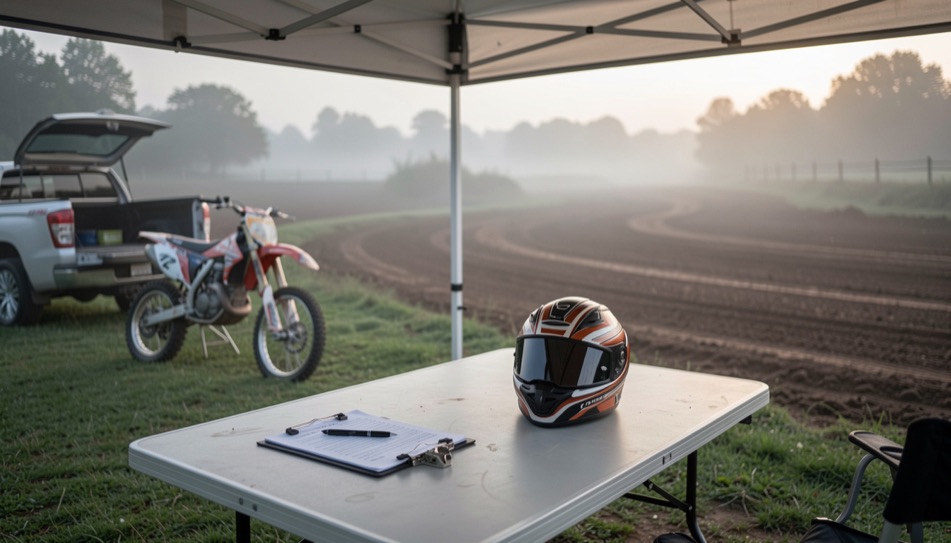
A first session for a child is measured in minutes and in how it ends, not in laps. This note sets out the machine, the ground and the single instruction worth giving, and reads the same problem in the learn to swim writing.
-
· Gear and the Weekend
An adult beginner at a private motocross track: the first season
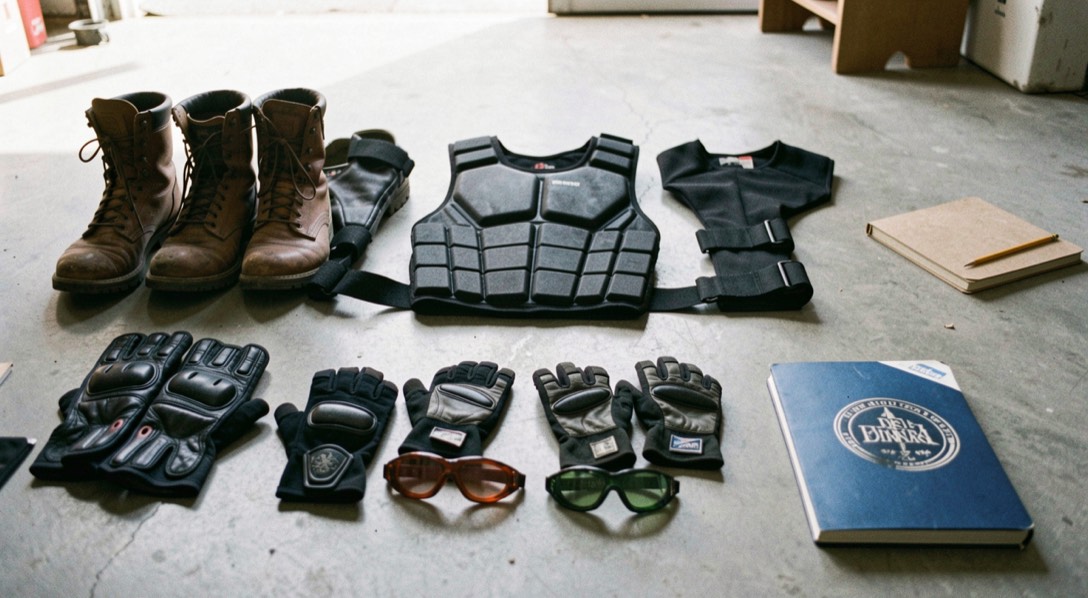
An adult beginner is not a child with a bigger budget. The week, the machine and the group all work differently, and the community leagues of other sports have already solved most of the same problems.
-

· Gear and the Weekend
A 200 cc ATV on a private track: what the class can and cannot do
A 200 cc quad is a working machine that can visit a track, not a track machine that can work. Here is the order to read the class in: transmission, cooling, tires, and the paperwork question that follows the ground rather than the machine.
-
· Gear and the Weekend
Small-bore skills: what a 125 teaches you before the big bike
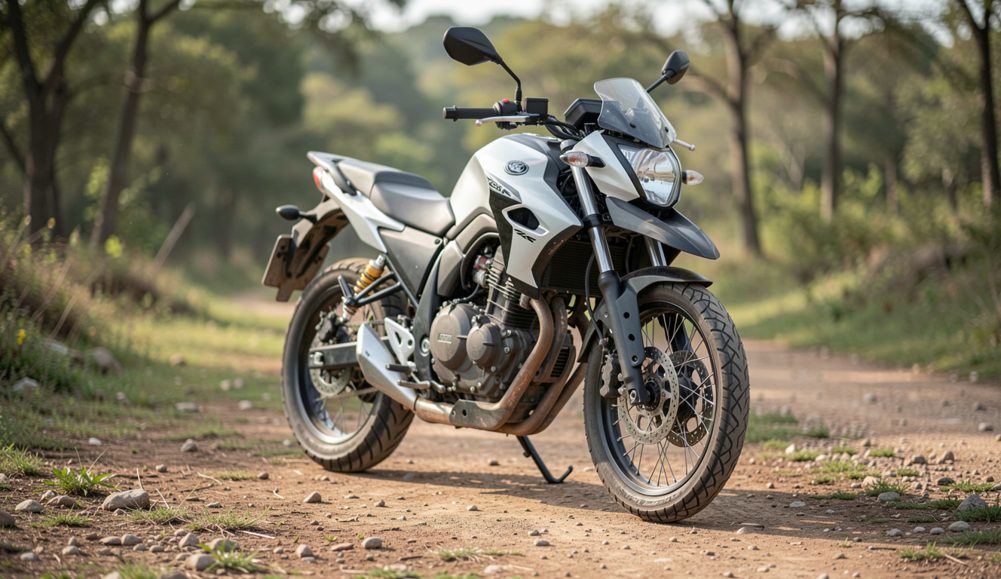
A 125 removes the option of buying back mistakes with power, which is exactly why it is the honest school. Here is what it teaches, the maintenance habits worth building on one, and the licence class the road versions live under.
-
· Gear and the Weekend
Getting fit for a practice day, off the bike
The part of a practice day that runs out first is the rider, not the bike. Here is what a day of motos actually asks of the body, why running covers most of it, and a four week ramp small enough to survive a working week.
-
· Gear and the Weekend
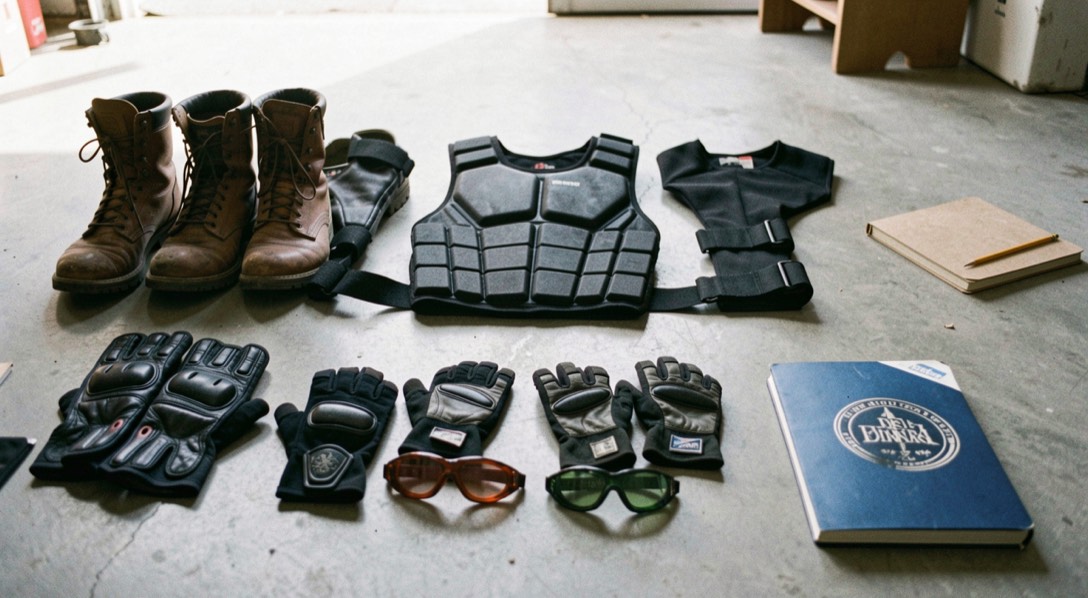
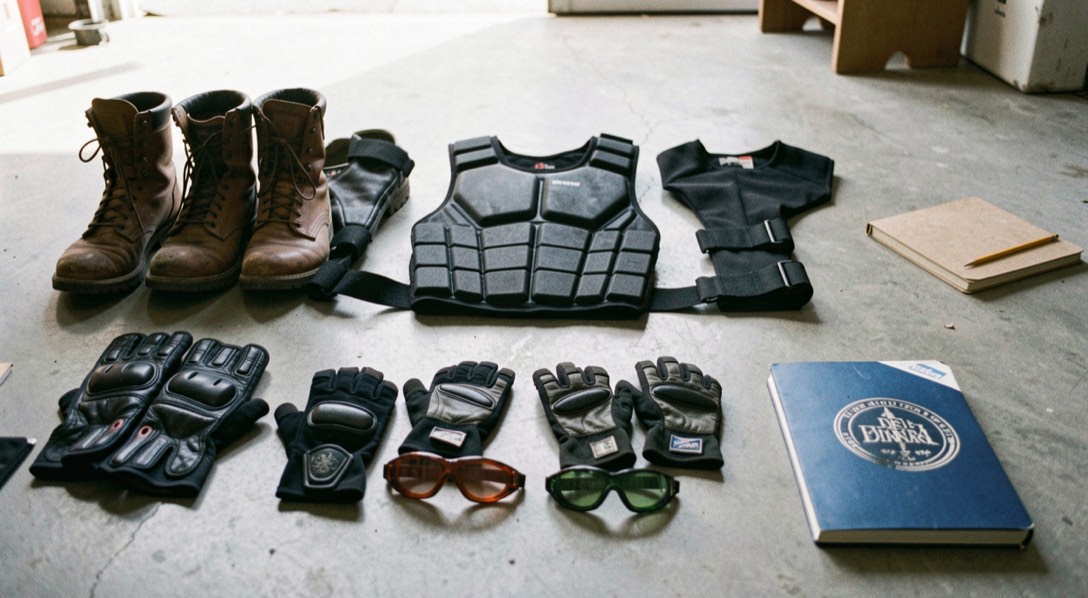
A gear checklist for a day on the track
A private track has no rulebook, so the list is yours to write. The sanctioning body's own equipment section is the best starting draft there is, because it already separates mandatory from recommended. Here it is item by item, with what the DOT label on a helmet does and does not certify.
-
· Gear and the Weekend
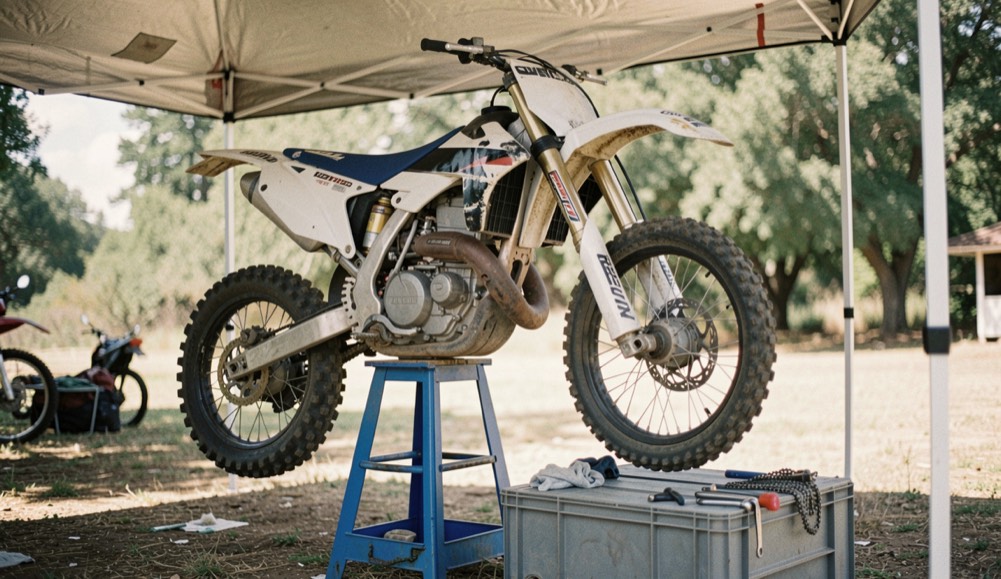
Between motos: the maintenance stand routine
Twenty to thirty minutes on the stand is enough to check everything and not enough to fix everything. This note gives the order, the three verbs applied to every part, a procedure in thirds that includes the rider, and a table that says where each finding gets fixed.
-
· Gear and the Weekend
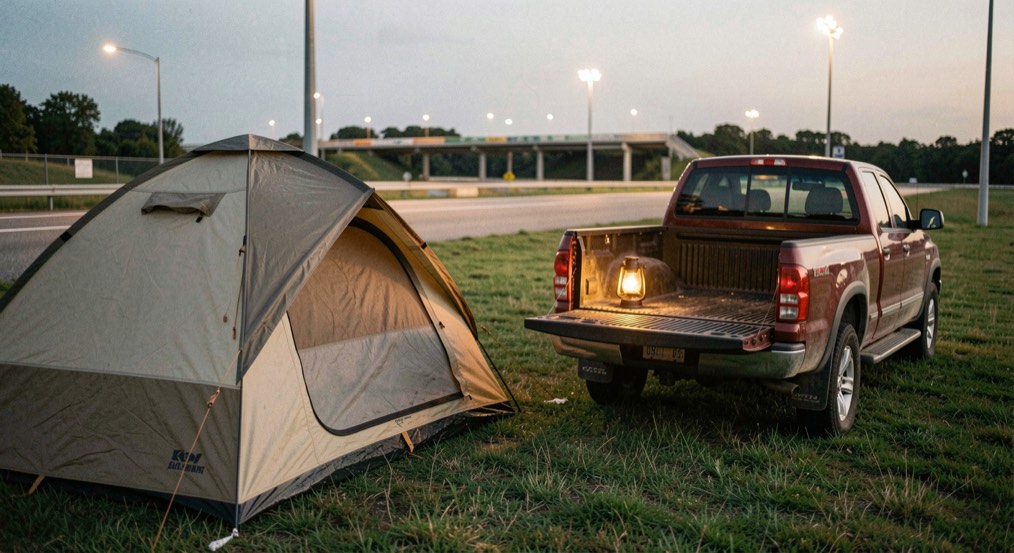
Camping at the track: a weekend base that works
A camp beside a track is chosen on foot, in four checks, the evening you arrive. Here are the checks in order, what a low strip of grass across a field is telling you, where the dust goes when the first bike starts, and five spots that look right at dusk and fail by morning.
-
· Gear and the Weekend
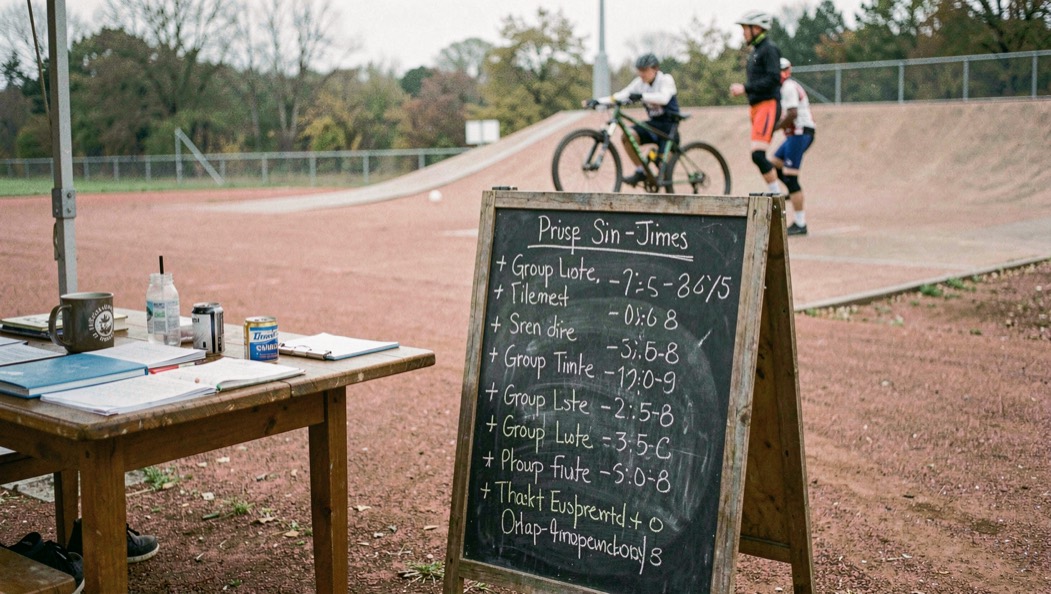
First time at a track: how a practice day runs
A practice day has a fixed order, and almost everything that can send a rider home is decided before the engine starts. Here is the day step by step, the sign-in checks tied to the rulebook section that governs them, and the sound test as the rulebook describes it.
Read this series next to Reading the Track, and the desk note on the about page.