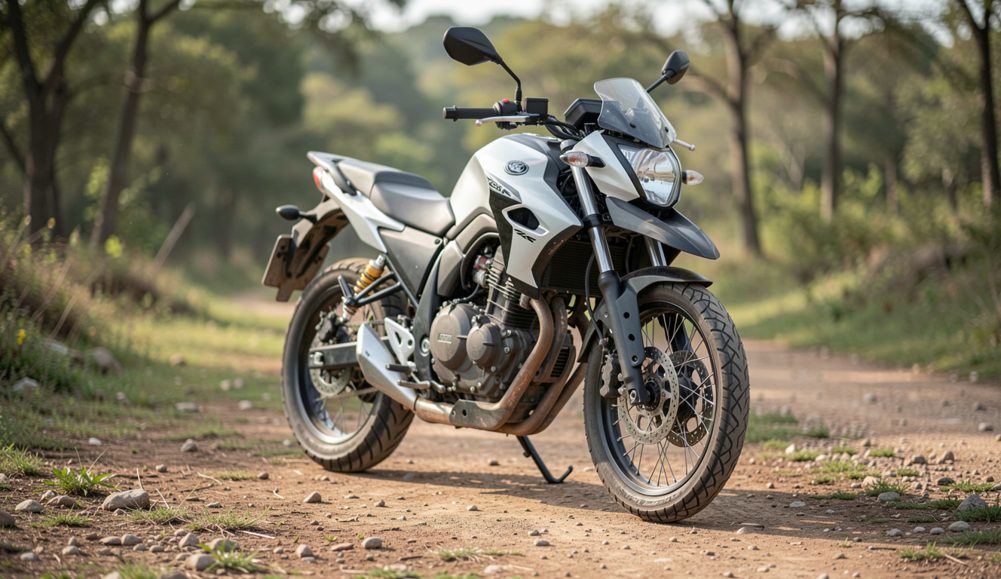
A 125 cc motorcycle teaches a rider what no larger machine can, because it removes the option of buying back mistakes with power. Every extra touch of the brake, every missed apex and every late throttle opening has to be paid for down the next straight, and a rider learns within one session where lap time actually comes from: conserving momentum, not creating it. The skills transfer upward unchanged; the habits a big bike lets a rider survive are the ones a 125 will not forgive.
Which road-legal 125s are worth a look?
The road-legal 125 class exists because a licence category created it. In Britain, and in similar form across Europe, the A1 category covers machines up to 125 cc and 11 kW, which is why so many small bikes are built to exactly that ceiling. The class shaped to the rule includes faired sport machines such as the Yamaha YZF-R125 and the Suzuki GSX-R125, naked roadsters and small trail bikes, all of them living under the same 11 kW roof.
A German magazine devoted to the Yamaha keeps a running file on that model: its 124.7 cc engine at the 11 kW ceiling, its service points, its insurance and its A1 paperwork, in the YZF-R125 owner's magazine at forum-r125.de, which also sets the machine against the Suzuki GSX-R125 and rides it on German back roads. For a rider choosing inside the class, the decision is usually between the faired bikes on riding position and the nakeds on price and simplicity; what matters is that all of them sit under the same licence line.
Those road versions are also why a 125 is a practical school rather than only a paddock one: the same machine that teaches momentum on a track can be ridden to the track, licence permitting.
The same small machine is where most young riders begin, and the order to introduce it in is set out in starting a young rider.
Why does a 125 teach throttle control better than a bigger bike?
Because the throttle on a 125 is a budgeting tool rather than a rescue. A small four stroke single at its limit makes roughly a dozen horsepower, so a rider who brakes a fraction too late, or turns in a fraction too early and has to wait, spends the whole next straight paying the debt. On a bigger bike the same mistake is invisible: the engine simply replaces the speed.
That visibility is the whole lesson. On a 125 the connection between a clean corner exit and a fast straight is direct and felt, which is the arithmetic laid out in riding lines and lap time. The rider who learns to open the throttle early, on a straightened bike with the steering finished, is learning the thing that stays true when the machine is several times as powerful.
The same argument runs in the other direction. A rider who can only go fast by overpowering the problem has a gap that shows up the moment the weather, the surface or the machine stops cooperating. Small bores find that gap early and cheaply.
Carrying speed instead of making it
What a 125 rewards, in order, is: braking once, decisively, in a straight line; turning in with the speed already right; getting the bike straight early so the throttle can open; and holding a line that keeps the wheels rolling rather than one that looks fast. It is the same list a coach writes for a rider on a big machine, except that on a 125 each item is worth a place rather than a tenth.
What it punishes is coasting. A small engine has nothing to give a rider who enters a corner off the throttle and off the brakes, so the class builds the habit of being on one or the other, always. The marks that show where experienced riders start slowing are read in how to read a track.
What maintenance habits should a new rider build on a small bike?
A 125 is a cheap classroom in the paddock for the simple reason that everything on it is small, accessible and forgiving of a learner's mistakes. The habits worth building on one are the same ones the between-sessions routine is made of.
- Chain slack and lube, checked every ride. A small bike works its chain hard because the rider holds the throttle open; it is where the feel for a worn chain is learned.
- Tire pressure against the manual, not against habit. On a light machine a pound or two changes how the front talks.
- Oil level and the service schedule. A small, high revving four stroke is sensitive to neglected oil, and the service book is the document that binds.
- Valve clearance on the four strokes. A slow loss of power on a small bike is often a clearance issue, and checking one is an afternoon's work on a 125.
- The between-sessions look. Wheels, brakes, leaks, in the fixed order of the maintenance stand routine.
Where a 125 stops teaching
The class stops being a school at two points. The first is when the rider's body no longer fits the machine: a tall rider folded onto a small bike learns to ride around their own knees, which is a different lesson. The second is when the available power stops being the constraint: on a wide open track, or against a headwind, a 125 simply runs out, and the rider is no longer choosing lines but accepting them.
At that point the machine has taught what it knows, and the habits it built, the early throttle, the single decisive braking, the tidy line, are the things worth carrying to the next bike. What a day on track asks of the rider rather than the machine is the subject of getting fit for a practice day, and the four-wheel class that shares the same ground is covered in a 200 cc ATV on a private track.
The lesson in one line
A 125 makes momentum visible. Learn to keep it on the small bike, where losing it is cheap, and the bigger machine becomes a detail rather than a disguise.
Sources checked for this note
The A1 licence ceiling of 125 cc and 11 kW and the minimum age of 17 are from the United Kingdom government page on motorcycle licence categories, bike categories, ages and licence requirements on gov.uk, checked September 12, 2026. The skills argument and the maintenance list are this desk's working method; no lap time on any machine is claimed.