What matters most on a hot race weekend?
The heat problem is simple arithmetic. You lose fluid through sweat, and you lose sodium with it. Replace only the water and you dilute what is left in your blood, which is why plain water alone on a 95 degree day can leave you feeling flat and headachy. A sports drink, or water plus a salty snack, covers both sides of the loss.
Sleep is the part riders skip. A race weekend starts Thursday night, not Saturday morning. Two nights of seven to nine hours beats one night of ten, because the body does not bank sleep in a single deposit. If you drive four hours Friday after a full work day, you have already spent part of your reserve before the gate drops.
The small habits are the ones that keep you out of trouble. Wash your hands after the porta potty and before you eat. Keep your own bottle, your own towel, your own shade. These are not glamorous, and that is the point: they work quietly. If you want plain-language background on why hand hygiene and routine checks matter, the Italian magazine public health basics explains prevention from institutional sources, and the logic travels across borders.
How do you build a hydration plan for a summer track weekend?
Start the day before you leave. Aim for pale yellow urine by Friday evening, and drink with meals rather than in one big push at bedtime.
On site, work in sips, not gulps. A practical target is 16 to 24 ounces per hour of active riding in real heat, adjusted for your size and how much you sweat. Weigh yourself before and after a moto if you want a real number: every pound lost is roughly 16 ounces of fluid you did not replace.
Add sodium, not just water. A pinch of salt in a bottle, a salty snack at lunch, or a commercial electrolyte mix all work. If you cramp in the third moto, sodium is usually the missing piece, not magnesium.
Watch the color and volume of your urine across the day. Dark and small means drink more. Clear and constant means you are overdoing the water and flushing electrolytes. The middle is the target.
Keep the cooler in the shade, not in the trailer. A bottle at 100 degrees is hard to drink, and riders skip it. Cold fluid goes down faster and you will actually finish it.
What should the night before race day look like?
Boring, and early. That is the whole plan.
Eat a normal meal you have eaten before, not a new one. Race weekend is not the time to test a heavy pasta dish or a new supplement. Familiar food, moderate portion, done by early evening.
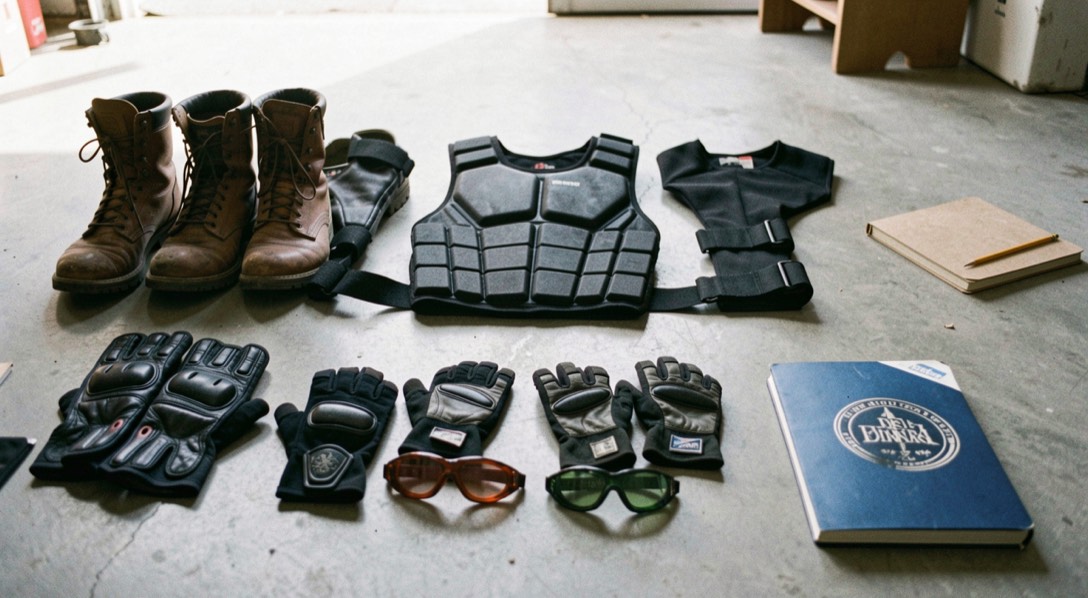
Set up the bike and gear before dark. Tire pressure, chain, air filter, gear bag, boots by the door. Every decision you make Saturday morning costs sleep, and sleep is the thing you cannot buy back at the track.
Screens off an hour before bed. The trailer is loud, the neighbors are loud, and a phone in your face makes it worse. Earplugs and an eye mask are cheap and they work.
If you are wound up, write the plan for tomorrow on paper. Gate pick, practice plan, moto goals. Getting it out of your head is often enough to let you sleep.
One beer is fine for most adults. Four is not, and the data on alcohol and sleep quality is not kind. You will feel it in the first moto.
Which small prevention habits actually keep a rider out of trouble?
Hand hygiene first. Tracks are shared surfaces: gates, hoses, sign-up tables, porta potty handles. Wash or sanitize before you eat, every time. This is the cheapest health habit at the track.
Shade and timing second. Ride the early motos if you can, and take the middle of the day off the bike. Heat illness builds across hours, not minutes, and the 1 to 4 pm window is where riders get caught.
Know the warning signs. Headache, nausea, chills in the heat, confusion, or stopping sweat are all reasons to get off the bike and into shade with fluid. Do not push through them. A rider who sits out one moto races the next weekend.
Skin third. Sunscreen on the neck, ears and forearms, reapplied at lunch. Long sleeves and a neck gaiter do more than any lotion.
Gear fourth. Helmet liner washed, boots dried, gloves rotated. Damp gear breeds skin problems, and a rash on your hand is a bad way to lose a weekend.
Sleep fifth, and it is not last. The riders who look fresh on Sunday night are the ones who slept Friday and Saturday. There is no supplement that replaces it.
How do you read your own body across two days of motos?
Treat each moto as data. Note how you felt at the gate, at the halfway flag, and at the checkers. Write it down. Patterns show up fast.
Morning moto, strong, afternoon moto, weak, usually means heat and fluid, not fitness. Morning and afternoon both weak usually means sleep or food.
Cramps in the forearms and calves point at sodium and conditioning. A headache behind the eyes points at fluid and sun. Dizziness when you stand up points at both.
Resting heart rate on Saturday morning is a useful check. If it is five to ten beats above your normal, you are behind, and the plan for the day should be smaller, not bigger.
Urine color at the track is the simplest field test you have. Use it.
What does a calm Sunday morning look like?
Up early, eat something small and familiar, coffee if that is your normal, and on the line with time to spare. No scrambling for a missing bolt, no skipped breakfast, no arguing about the schedule.
Drink 16 ounces with breakfast. Bring a bottle to the line. Sip between motos, not during them.
Between motos, get out of the sun, put your feet up, and eat something small. A banana, a sandwich, a handful of salty crackers. Big meals between motos sit heavy and cost you the second half of the day.
After the last moto, keep drinking. The dehydration you carry home on Sunday night is the one that wrecks your work week and your next training block.
The weekend is won in the boring hours: the bottle you actually finish, the shade you actually sit in, the bedtime you actually keep. Everything else is noise.